Exams are an important part of student life, but many students feel worried, nervous, and stressed when exam time comes closer. The pressure of completing the syllabus, remembering important topics, and getting good marks can make studying feel difficult. However, exam preparation does not have to be stressful. With the right study plan, good habits, and a positive mindset, students can prepare for exams with confidence and stay calm throughout the process.
Learning how to prepare for exams without stress is not about studying all day or spending sleepless nights with books. It is about using your time wisely, understanding your subjects, taking care of your health, and avoiding unnecessary pressure. A simple and organized approach can make exam preparation easier and more effective.
Start Your Exam Preparation Early
One of the best ways to reduce exam stress is to start preparing early. Many students wait until the last few days before exams and then try to study everything at once. This creates pressure and makes it difficult to understand and remember information.
Starting early gives you enough time to cover each subject properly. You can divide your syllabus into smaller sections and study them step by step. When you study a little every day, the workload becomes much easier to manage.
Early preparation also gives you extra time to review difficult topics. Instead of worrying about unfinished chapters, you can focus on improving your understanding and preparing for the exam with confidence.
Make a Simple Study Plan
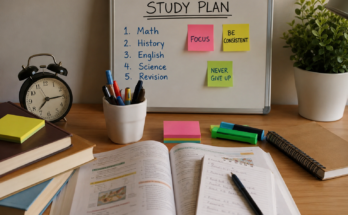
A good study plan can help you stay organized and avoid unnecessary stress. Before you begin studying, look at your syllabus and decide how much time you need for each subject.
Create a realistic daily schedule instead of making a plan that is impossible to follow. Give more time to difficult subjects and less time to topics that you already understand. Include short breaks in your schedule so your mind can rest.
For example, you can study for one hour, take a short break, and then continue with another topic. A balanced study routine is usually more useful than studying continuously for many hours.
Remember that your study plan should guide you, not control you. If you miss a study session, do not panic. Simply adjust your schedule and continue.
Understand the Syllabus
Knowing what you need to study is an important part of effective exam preparation. Read your syllabus carefully and identify the important chapters, topics, formulas, definitions, and concepts.
Make a list of topics that you already understand and topics that need more attention. This will help you use your study time efficiently.
Instead of reading every page repeatedly, focus on understanding the main ideas. When you understand a topic, it becomes easier to remember it during the exam.
Use Effective Study Techniques
Good study techniques can save time and improve memory. Simply reading the same chapter again and again may not always be effective.
Try active learning methods such as making short notes, asking yourself questions, explaining a topic in your own words, and practicing previous exam questions.
Practice tests are especially useful because they help you understand the exam format and identify areas where you need improvement. You can also use flashcards for important definitions, facts, vocabulary, and formulas.
Another useful method is to study difficult topics when your mind is fresh. If you are more focused in the morning, use that time for challenging subjects.
Take Regular Breaks
Studying without breaks can make you tired and reduce concentration. Your brain needs time to rest and process information.
Take short breaks between study sessions. During a break, stand up, walk around, drink water, or simply relax for a few minutes. Try to avoid spending the entire break on social media because it can make it harder to return to your studies.
Regular breaks can improve concentration and help you study for longer without feeling exhausted.
Get Enough Sleep
Sleep is often ignored during exam preparation, but it plays an important role in learning and memory. Staying awake all night may seem like a good way to study more, but lack of sleep can make concentration and recall more difficult.
Try to maintain a regular sleep schedule during your exam preparation. Getting enough rest can help you feel more energetic and focused the next day.
Avoid making late night study a regular habit. A fresh and rested mind can often learn better than a tired mind that has been studying for many hours.
Eat Healthy Food and Stay Hydrated
Your physical health can affect your study performance. During exams, try to eat balanced meals that provide enough energy.
Include healthy foods such as fruits, vegetables, eggs, whole grains, and other nutritious options in your daily routine. Drink enough water throughout the day.
Try not to depend too much on sugary drinks or excessive caffeine to stay awake. These may provide temporary energy but can also affect your sleep and concentration.
Taking care of your body is an important part of preparing for exams without stress.
Exercise and Stay Active
Physical activity can help you feel relaxed during stressful study periods. You do not need to spend hours exercising. A short walk, stretching, or light exercise can help refresh your mind.
If you have been sitting and studying for a long time, take a few minutes to move around. Physical activity can make you feel more energetic and reduce feelings of tension.
Even a short daily walk can become a useful part of a healthy exam preparation routine.
Avoid Comparing Yourself With Others
Every student learns differently. Some students may finish the syllabus quickly while others may need more time. Comparing your progress with other students can increase exam stress.
Instead of worrying about what others are doing, focus on your own progress. Ask yourself whether you understand today’s topic better than you did yesterday.
Your goal should be improvement, not competition. Concentrating on your own study plan can help you remain calm and confident.
Practice Positive Thinking
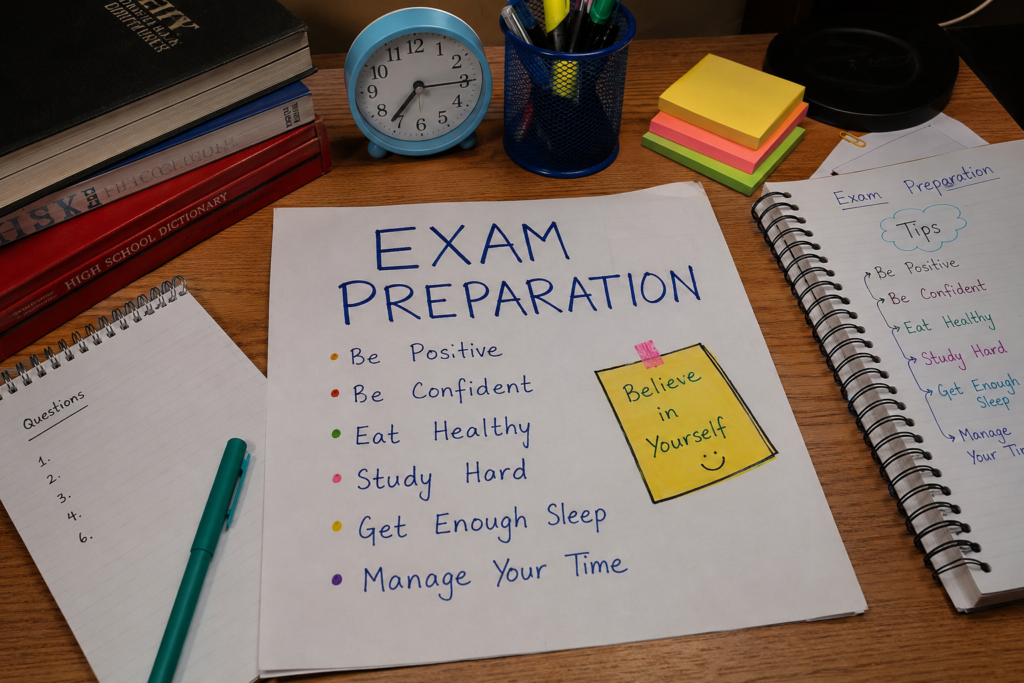
Your thoughts can have a strong effect on your exam preparation. If you constantly tell yourself that you will fail or that the syllabus is impossible, studying can become even more stressful.
Try to replace negative thoughts with realistic and positive ones. Tell yourself that you can improve through regular practice and that it is normal to find some topics difficult.
Positive thinking does not mean ignoring problems. It means facing challenges without allowing fear to control your actions.
Manage Exam Anxiety
Feeling nervous before an exam is normal. The goal is not to remove every feeling of nervousness but to learn how to manage it.
If you feel anxious, take a few slow and deep breaths. Sit quietly for a moment and focus on your breathing. Remind yourself that you have prepared and that you can answer the questions one at a time.
Avoid thinking about the entire exam at once. Focus on the question in front of you and move forward step by step.
Revise Before the Exam
Revision is an important part of successful exam preparation. After completing a topic, review it later instead of waiting until the final night.
Make short revision notes containing important points, formulas, definitions, and concepts. These notes can be very helpful when you need a quick review before the exam.
During the final days, focus more on revision and practice instead of trying to learn everything from the beginning.
Prepare Everything Before Exam Day
Being prepared for the practical details of an exam can also reduce stress. Check your exam timetable and make sure you know the date, time, and location of each exam.
Prepare the required stationery and other materials in advance. If you need to travel to an exam center, plan your route and leave enough time to arrive comfortably.
Avoid rushing at the last minute. Preparing everything the night before can help you start exam day with a calmer mind.
Stay Calm During the Exam
When the exam begins, take a moment to read the instructions carefully. Look through the questions and understand what each question is asking before you start writing.
Begin with questions that you understand well. This can build confidence and help you manage your time.
If you become stuck on a difficult question, do not panic. Move to another question and return to the difficult one later if time allows.
Keep an eye on the clock, but do not constantly worry about the remaining time. Focus on giving your best answer to each question.
Conclusion
Learning how to prepare for exams without stress requires planning, consistency, and healthy habits. Starting early, creating a simple study plan, using effective study techniques, taking regular breaks, getting enough sleep, eating healthy food, and staying positive can make exam preparation much easier.
Remember that studying successfully is not about spending every waking hour with your books. It is about studying smartly and giving your mind and body enough time to rest.
Exams are important, but they do not define your entire future. Prepare honestly, stay consistent, believe in your efforts, and approach each exam with a calm and confident mindset. With proper preparation, you can reduce exam stress and perform at your best.