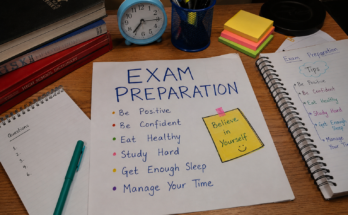

Getting better grades is not only about spending more hours with your books. It is also about studying in a smart and organized way. Many students study for several hours but still struggle to remember important information or perform well in exams. The main reason is often poor study habits. Developing effective study habits can make learning easier, improve concentration, reduce stress, and help students achieve better grades.
Good study habits do not develop overnight. They require consistency, patience, and a willingness to change old routines. Whether you are a school student, college student, or university student, improving the way you study can have a positive effect on your academic performance. With the right approach, you can make your study time more productive and reach your educational goals.
Create a Regular Study Schedule
One of the best ways to improve study habits is to create a regular study schedule. Studying whenever you feel like it can make it easy to waste time or postpone important work. A study schedule gives your day structure and helps you know exactly what needs to be completed.
Choose specific times for studying and try to follow the same routine each day. You do not have to study for many hours at once. Even two or three focused study sessions can be more useful than spending an entire day with your books without proper concentration.
Divide your subjects across the week according to their difficulty and importance. Give more time to subjects that require extra attention. A clear schedule can also help you avoid last minute exam preparation.
Set Clear Study Goals
Studying without a goal can make it difficult to stay focused. Before starting a study session, decide what you want to accomplish. Your goal could be reading a particular chapter, completing a set of questions, learning new vocabulary, or reviewing important notes.
Make your goals realistic and specific. Instead of saying that you will study mathematics for three hours, decide that you will complete twenty practice questions and review the formulas from a particular chapter.
Small goals make large tasks feel easier. When you complete each goal, you can see your progress and feel more motivated to continue.
Find a Quiet Study Environment
Your study environment can have a major effect on your concentration. A noisy or uncomfortable place can make it difficult to understand and remember information. Try to choose a clean, quiet, and comfortable study area.
Keep your books, notebooks, pens, and other necessary materials nearby so you do not have to leave your study area repeatedly. A tidy desk can also help you feel more organized.
If possible, keep your phone away while studying. Social media notifications, messages, videos, and games can quickly interrupt your concentration. Even a short distraction can make it difficult to return to your previous level of focus.
Avoid Multitasking
Many students believe they can study while watching television, checking social media, or chatting with friends. However, multitasking often reduces concentration and makes learning less effective.
When studying, focus on one task at a time. Give your full attention to the material in front of you. Once you complete a study session, take a short break before moving to another activity.
Single tasking allows your brain to process information more effectively. It can also help you complete your work in less time.
Use Active Learning Techniques
Reading the same chapter again and again is not always the best way to learn. Active learning techniques can make studying more effective because they require you to interact with the information.
One useful method is to explain a topic in your own words. After reading a chapter, close your book and try to explain the main ideas without looking at your notes. If you cannot explain something clearly, go back and review it.
You can also create questions from your study material and answer them yourself. Flashcards, practice tests, summaries, and mind maps are other useful tools for active learning.
The goal is not simply to read information but to understand it and remember how to use it.
Take Useful Notes
Good notes can make revision much easier. Instead of writing every sentence from a lecture or textbook, focus on important ideas, definitions, examples, formulas, and key facts.
Use simple language that you understand. Organize your notes with headings and short points so that you can quickly find important information later.
Review your notes regularly instead of waiting until the night before an exam. Regular review helps strengthen your memory and makes exam preparation less stressful.
Practice With Questions
Practice is one of the most effective ways to improve academic performance. Reading information can help you understand a subject, but answering questions shows whether you can actually use what you have learned.
For subjects such as mathematics, science, accounting, and languages, practice questions can be especially valuable. Try solving problems without immediately checking the answer.
If you make mistakes, do not become discouraged. Mistakes can show you which areas need more attention. Review your errors and try similar questions again.
Use the Pomodoro Study Method
The Pomodoro study method can be useful for students who find it difficult to concentrate for long periods. The basic idea is to study with full attention for a short period and then take a brief break.
For example, you can study for twenty five minutes and then take a five minute break. After several sessions, take a longer break.
This method can make large assignments feel less overwhelming. It also gives you regular opportunities to rest your mind and return to studying with better concentration.
Get Enough Sleep
Sleep is an important part of successful learning. Students sometimes stay awake late at night before an exam because they believe more study time will automatically lead to better grades. However, lack of sleep can make it harder to concentrate, remember information, and think clearly.
Try to maintain a consistent sleep routine. Give yourself enough time to rest, especially before important exams.
A well rested mind can learn more effectively than an exhausted mind. Good study habits should therefore include both productive study time and proper rest.

Take Regular Breaks
Studying continuously for many hours can lead to mental tiredness. When your concentration starts to decrease, take a short break.
During a break, stand up, walk around, drink water, or simply relax for a few minutes. Try not to spend the entire break scrolling through social media because it can become difficult to return to your studies.
Short and planned breaks can help you maintain energy and concentration throughout the day.
Stay Organized With Assignments
Poor organization can cause unnecessary stress. Students often forget deadlines because they have too many assignments, tests, and projects to remember.
Use a notebook, calendar, or digital planner to record important deadlines. Break large assignments into smaller tasks and complete them gradually.
Do not wait until the last day to start important work. Completing assignments earlier gives you time to review your work and make improvements.
Ask for Help When Needed
There is nothing wrong with asking for help when you do not understand a topic. Trying to solve every problem alone can sometimes waste valuable study time.
You can ask your teacher, classmates, tutor, or another knowledgeable person for an explanation. You can also use reliable educational resources to learn difficult concepts.
The important thing is to identify the problem instead of ignoring it. Understanding a difficult topic early can make future lessons much easier.
Stay Consistent
Consistency is one of the most important parts of improving study habits. You do not need to become a perfect student in one day. Start with small changes and continue practicing them.
For example, you can begin by studying at the same time each day, keeping your phone away during study sessions, and reviewing your notes regularly. As these actions become part of your routine, you can add more effective habits.
Remember that better grades are usually the result of consistent effort rather than one long night of studying.
Stay Positive and Believe in Your Progress
Your attitude toward learning can also influence your academic performance. If you constantly tell yourself that a subject is impossible, you may lose motivation before giving yourself a real chance to improve.
Instead, focus on progress. If you make mistakes, learn from them. If your grades are not where you want them to be, identify what you can change.
Every student has strengths and weaknesses. The goal is to keep improving rather than comparing yourself with everyone else.
Conclusion
Improving study habits is one of the most effective ways to get better grades and become a more confident learner. A regular study schedule, clear goals, active learning, good notes, practice questions, proper sleep, and regular breaks can make a significant difference in academic performance.
The key is to study with purpose instead of simply studying for long hours. Remove distractions, stay organized, practice what you learn, and ask for help when necessary. Most importantly, remain consistent with your efforts.
Better grades do not come from a single study session. They come from small positive habits repeated every day. When you develop effective study habits and take responsibility for your learning, you can improve your understanding, increase your confidence, and move closer to your academic goals.