Education plays an important role in building a successful career. In today’s competitive world, having knowledge, skills, and proper qualifications can help people find better job opportunities and achieve their professional goals. Education does not only teach students about subjects and theories. It also develops communication skills, problem solving abilities, confidence, discipline, and a sense of responsibility. These qualities are important for career success in almost every profession.
Many people believe that career success depends only on experience or talent. While these things are important, education provides a strong foundation that helps individuals use their talent in the right way. From basic schooling to higher education and professional training, every stage of education can contribute to personal and professional growth. A good education can open doors to opportunities that may otherwise be difficult to reach.
Education Provides Knowledge and Skills
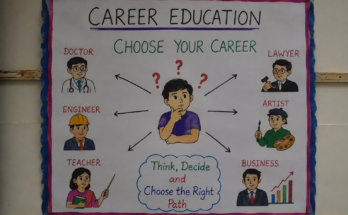
One of the main reasons education is important for career success is that it provides useful knowledge and skills. Every career requires a certain level of understanding and ability. Doctors need medical knowledge, engineers need technical knowledge, teachers need educational skills, and business professionals need knowledge of management and finance.
Education helps students understand the basic concepts related to their chosen field. It also gives them opportunities to practice what they learn. This combination of knowledge and practical learning can make people more prepared for the workplace.
For example, a student who studies computer science can learn programming, software development, databases, and other technical skills. These skills can help the student qualify for jobs in the technology industry. In the same way, a student studying business can learn about marketing, management, accounting, and communication, which can be useful in many professional roles.
Education Creates Better Career Opportunities
Education can increase the number of career opportunities available to a person. Many employers require candidates to have specific educational qualifications before they can apply for a job. A degree, diploma, certificate, or professional qualification can help a person meet these requirements.
People with relevant education may have access to jobs that offer better salaries, career growth, and professional development. Education can also help individuals move into specialized fields where advanced knowledge is required.
For example, someone who wants to become an accountant may need professional education and training. Someone who wants to become a lawyer needs legal education and professional qualifications. Without the required education, entering these professions can be extremely difficult.
This is why choosing the right educational path can have a major effect on future career opportunities.
Education Improves Communication Skills
Communication is one of the most valuable skills in the workplace. Employees need to communicate with managers, coworkers, customers, clients, and business partners. Education helps people improve both written and verbal communication.
Students regularly participate in classroom discussions, presentations, assignments, group activities, and examinations. These experiences help them express their ideas more clearly and confidently.
Good communication can help professionals build strong relationships at work. It can also help them explain their ideas, solve misunderstandings, participate in meetings, and communicate with customers effectively. As a result, communication skills developed through education can play an important role in career success.
Education Develops Critical Thinking
Career success is not only about memorizing information. Professionals often need to analyze situations, identify problems, compare different options, and make good decisions. Education helps develop critical thinking and problem solving skills.
During their studies, students are often asked to complete projects, research topics, answer questions, and solve problems. These activities encourage them to think carefully instead of simply accepting information.
Critical thinking becomes especially valuable when people face challenges in their careers. An employee who can understand a problem and find a practical solution can become a valuable member of an organization.
Education Builds Confidence
Confidence is another important part of professional success. People who have strong knowledge and skills are often more confident when they face new challenges.
Education gives students opportunities to learn from their mistakes and improve their abilities. Completing assignments, passing examinations, giving presentations, and working on projects can gradually increase confidence.
A confident employee may be more willing to share ideas, take responsibility, communicate with others, and apply for leadership positions. Education therefore helps people develop not only professional knowledge but also the confidence needed to use that knowledge.
Education Teaches Discipline and Responsibility
Success in any career requires discipline and responsibility. Employees need to arrive on time, complete their tasks, meet deadlines, and follow workplace rules. Education can help students develop these habits from an early stage.
Students have deadlines for assignments, examination schedules, attendance requirements, and responsibilities related to their studies. Learning to manage these responsibilities prepares them for professional life.
Time management is also an important lesson that students can learn through education. A person who knows how to organize tasks and use time effectively can perform better in a professional environment.
Education Helps People Adapt to Change
The modern workplace is changing quickly. New technologies, business methods, and professional requirements appear regularly. Workers need to continue learning if they want to remain successful.
Education develops a habit of learning and encourages people to gain new knowledge. A person who understands the value of learning is more likely to accept new technologies and adapt to changing workplace conditions.
For example, digital technology has changed many traditional jobs. Employees who continue learning new software, tools, and professional skills can remain competitive in the job market. Education provides the foundation for this continuous learning process.
Education Supports Professional Growth
Getting a job is only one part of career success. Professional growth is also important. Many people want to receive promotions, take leadership positions, earn higher salaries, or start their own businesses.
Education can support these goals by providing advanced knowledge and professional qualifications. Higher education can help people specialize in their fields and prepare for positions with greater responsibilities.
Professional courses and training programs can also help employees improve their existing skills. Continuous education allows workers to stay updated and become more valuable in their organizations.
Education Helps Build Professional Networks
Education also provides opportunities to meet other people. Students interact with teachers, classmates, professionals, and mentors. These relationships can become useful throughout their careers.
A strong professional network can help people learn about job opportunities, industry trends, internships, training programs, and other career options. Sometimes a connection made during college or professional training can lead to a valuable career opportunity later.
Networking also helps people exchange ideas and learn from the experiences of others.
Education Can Help Entrepreneurs
Education is not only useful for people looking for traditional employment. It can also help entrepreneurs build successful businesses.
Business education can teach people about marketing, finance, management, customer service, planning, and business communication. These skills can help entrepreneurs understand how to create and manage a business.
Even when a person does not study business formally, general education can develop creativity, problem solving, communication, and decision making skills that are useful for entrepreneurship.
Education Develops a Growth Mindset
Career success often requires patience and continuous improvement. Education can encourage people to develop a growth mindset. Instead of believing that abilities cannot change, students learn that skills can improve through practice, learning, and effort.
This mindset can help professionals deal with failure and challenges. A person who sees mistakes as learning opportunities is more likely to continue working toward long term career goals.
Education and Long Term Career Success
The importance of education for career success becomes clearer when we look at long term professional development. Skills and knowledge gained through education can continue to benefit people for many years.
Education does not guarantee success because career growth also depends on experience, hard work, attitude, networking, and personal effort. However, education provides a strong foundation on which these qualities can be built.
A person with good education and practical experience can have a stronger ability to compete in the job market. Education can also make it easier to understand new ideas and take advantage of new opportunities.
Conclusion
Education is important for career success because it provides knowledge, develops useful skills, improves communication, builds confidence, and prepares people for professional challenges. It can create better career opportunities and help individuals grow within their chosen professions.
In a competitive job market, education can give people an advantage by preparing them for the requirements of modern workplaces. It also encourages continuous learning, critical thinking, discipline, and adaptability.
Career success does not come from education alone. Hard work, practical experience, dedication, good communication, and a positive attitude are also necessary. However, education gives people the foundation they need to develop these qualities and use them effectively.
For anyone planning a successful future, investing in education can be one of the most valuable decisions. The knowledge and skills gained through education can open new doors, create professional opportunities, and help individuals build a stable and rewarding career.