
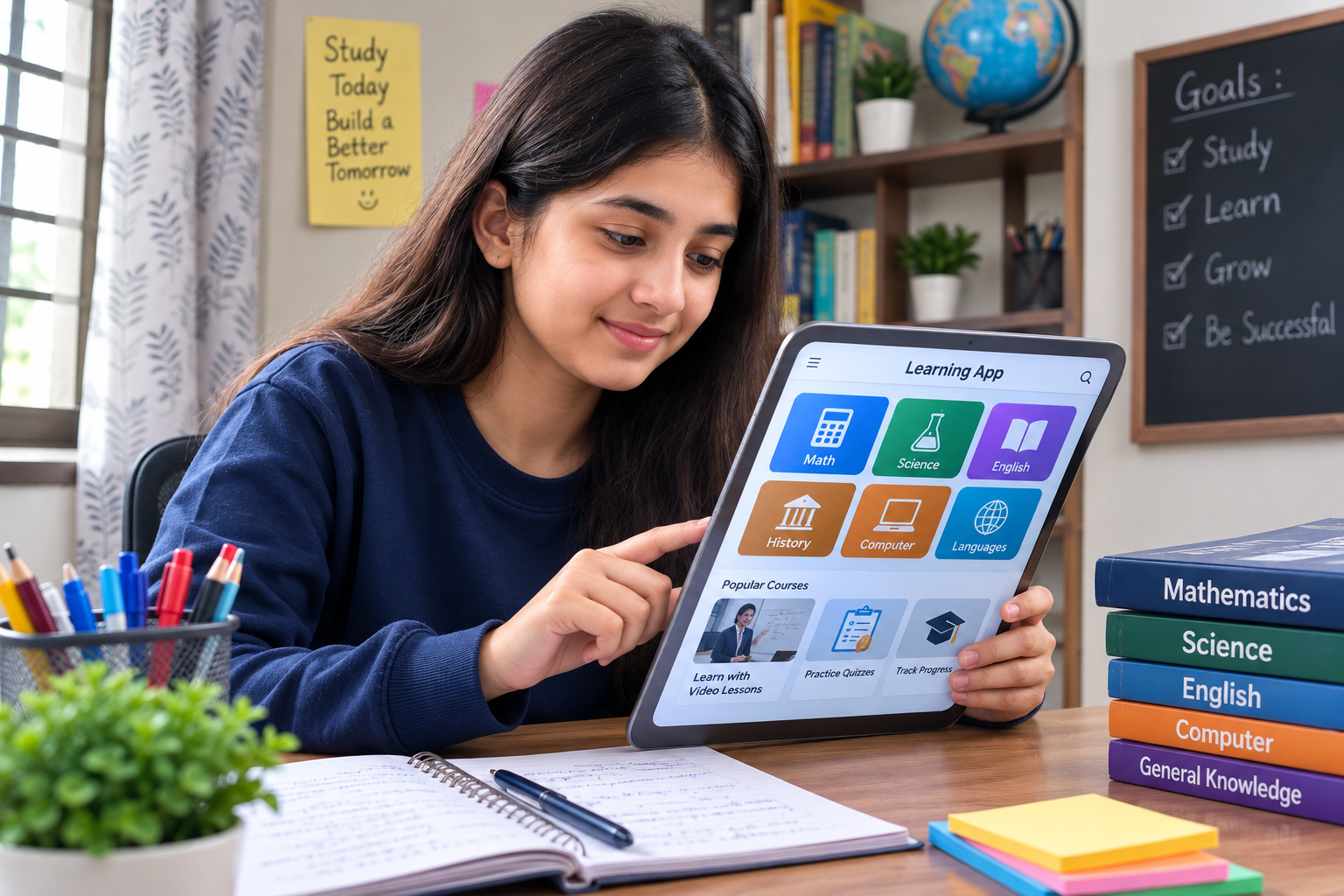
Education has changed greatly with the growth of technology. Today, students can learn not only from books and classrooms but also from smartphones, tablets, and computers. One of the most useful developments in modern education is the rise of educational apps. These apps provide students with easy access to lessons, practice activities, study materials, quizzes, and other learning resources.
Educational apps for students are becoming popular because they make learning more convenient, interactive, and flexible. Students can use them at home, at school, or while traveling. They can learn according to their own pace and spend more time on topics they find difficult. With the right educational apps, technology can become a helpful learning partner for students of different ages.
What Are Educational Apps?
Educational apps are software applications designed to support learning and teaching. They can cover many subjects, including mathematics, science, English, history, languages, computer skills, and general knowledge. Some apps focus on one specific subject, while others provide a complete collection of learning resources.
Many educational apps include videos, animations, games, quizzes, digital flashcards, practice exercises, and progress reports. These features can make difficult topics easier to understand. Instead of only reading information from a textbook, students can interact with lessons and practice what they have learned.
Easy Access to Learning Resources
One of the biggest benefits of educational apps for students is easy access to learning materials. Students do not always need to carry several books or notebooks with them. A smartphone or tablet can provide access to a large amount of educational content.
This is especially useful for students who want to study outside the classroom. They can open an educational app whenever they have free time and review their lessons. Students can also find additional explanations when a topic from school is not clear to them.
Easy access to learning resources can encourage students to study more regularly. Instead of waiting for the next class, they can continue learning whenever they are ready.
Flexible Learning Experience
Every student has a different learning style and speed. Some students understand a topic quickly, while others need more practice and explanation. Traditional classroom learning may not always provide enough time for every student to learn at their preferred pace.
Educational apps provide a more flexible learning experience. Students can pause a lesson, repeat a video, practice questions again, or review previous topics. They can spend more time on difficult subjects without feeling pressured by the pace of the whole class.
This flexibility can help students become more comfortable with learning. They can create study sessions that fit their daily routines and personal needs.
Interactive Learning Makes Education Interesting
Another important benefit of educational apps is interactive learning. Reading a textbook for a long time can sometimes become boring, especially for younger students. Educational apps can use animations, games, pictures, sounds, and interactive questions to make lessons more interesting.
Interactive activities can encourage students to participate actively instead of simply receiving information. For example, a mathematics app may allow students to solve problems through games, while a language learning app may use pronunciation exercises and quizzes.
When students enjoy the learning process, they may become more interested in studying and practicing regularly.
Better Understanding of Difficult Subjects
Some subjects can be difficult for students to understand through traditional teaching methods alone. Educational apps can provide different ways to explain the same concept.
For example, a science app may use animations to explain how the human body works. A mathematics app can show step by step solutions to complex problems. A language app can provide audio examples to help students understand pronunciation.
These different learning methods can make complex information easier to understand. Students can also repeat explanations as many times as needed.
Improved Study Habits
Educational apps can also help students develop better study habits. Many apps allow users to set goals, create study schedules, complete daily exercises, and track their progress.
When students use an app regularly, they can develop a consistent learning routine. Instead of studying only before examinations, they may start reviewing lessons every day.
Regular practice can improve memory and understanding. Small study sessions completed consistently can be more effective than trying to learn a large amount of information at the last moment.
Instant Feedback and Progress Tracking
Traditional homework may take time to receive feedback from a teacher. Educational apps can often provide instant feedback after students complete quizzes or exercises.
If a student gives a wrong answer, the app may explain the correct answer or provide another opportunity to solve the question. This allows students to recognize their mistakes quickly.
Progress tracking is another useful feature. Students can see which lessons they have completed and which areas require more attention. This information can help them understand their strengths and weaknesses.
Support for Exam Preparation
Educational apps can be very helpful during exam preparation. Many apps provide practice tests, quizzes, flashcards, sample questions, and revision materials.
Students can use these resources to review important topics before examinations. Practice tests can also help students become familiar with different types of questions.
Using educational apps for exam preparation can make revision more organized. Students can focus on weak areas instead of spending the same amount of time on every topic.
Learning New Languages
Language learning is another area where educational apps can be extremely useful. Students can learn vocabulary, grammar, pronunciation, reading, and listening skills through mobile applications.
Many language learning apps use short lessons and regular practice activities. Students can learn a few new words each day and review them later.
Audio features can also help students improve pronunciation and listening skills. This makes educational apps useful for students who want to learn a new language outside the classroom.
Encouraging Independent Learning
Educational apps can encourage students to take greater responsibility for their education. Instead of depending completely on teachers or parents, students can search for information and practice lessons independently.
Independent learning can help students develop confidence and problem solving skills. When students discover answers on their own, they may become more curious and willing to explore new subjects.
This habit can be valuable beyond school because learning continues throughout life.
Affordable Learning Opportunities
Many educational apps are available for free or at a lower cost than traditional learning resources. Some apps provide free lessons, practice questions, and educational videos.
This can give students additional learning opportunities without requiring expensive books or private tutoring. However, students and parents should check the quality of an app before using it regularly.
Free access can be especially helpful for students who have limited educational resources. A mobile device with useful educational applications can provide access to learning materials that may otherwise be difficult to obtain.
Learning Anytime and Anywhere
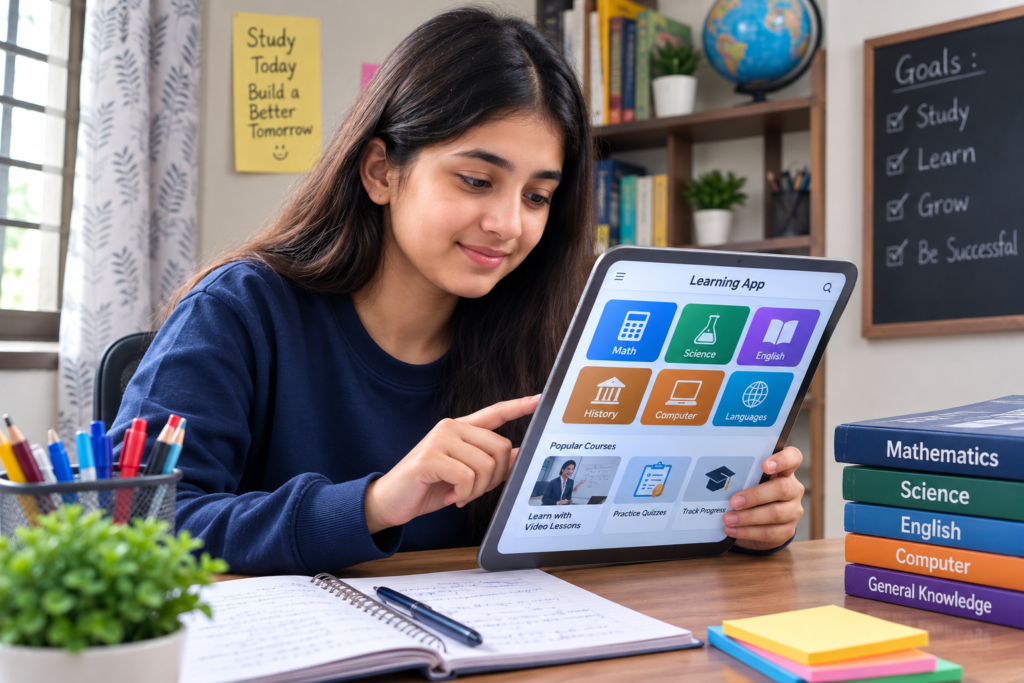
Another major advantage of educational apps is location freedom. Students can learn at home, in a library, during a break, or while traveling.
This makes education more flexible than ever. A student does not always need to sit in a classroom to review a lesson. As long as the required device and learning resources are available, study can continue in many different places.
This feature is particularly useful for students with busy schedules. They can use short periods of free time for revision or practice.
Building Digital Skills
Using educational apps can also help students develop digital skills. Technology is now an important part of education and many careers. Students who regularly use digital learning tools can become more comfortable with technology.
They can learn how to navigate applications, search for information, manage digital resources, and use online learning platforms responsibly.
These skills can support students in higher education and future workplaces.
Helping Teachers and Parents
Educational apps are not only beneficial for students. They can also support teachers and parents. Teachers can recommend useful apps for additional practice and revision. Some applications provide progress reports that can help teachers understand student performance.
Parents can also use educational apps to support learning at home. They can encourage children to practice subjects and monitor their learning activities when appropriate.
However, adults should make sure that students use technology in a balanced way and choose reliable educational resources.
Conclusion
Educational apps for students have become an important part of modern education. They provide easy access to learning resources, flexible study options, interactive lessons, instant feedback, and useful practice activities. They can also support exam preparation, language learning, independent study, and the development of digital skills.
The main goal of educational technology should not be to replace teachers or traditional learning completely. Instead, educational apps should be used as supportive tools that make learning more accessible and engaging.
When students use educational apps responsibly and combine them with classroom learning, books, practical activities, and guidance from teachers, they can create a stronger learning experience. As technology continues to develop, educational apps are likely to become an even more useful part of student education and everyday learning.