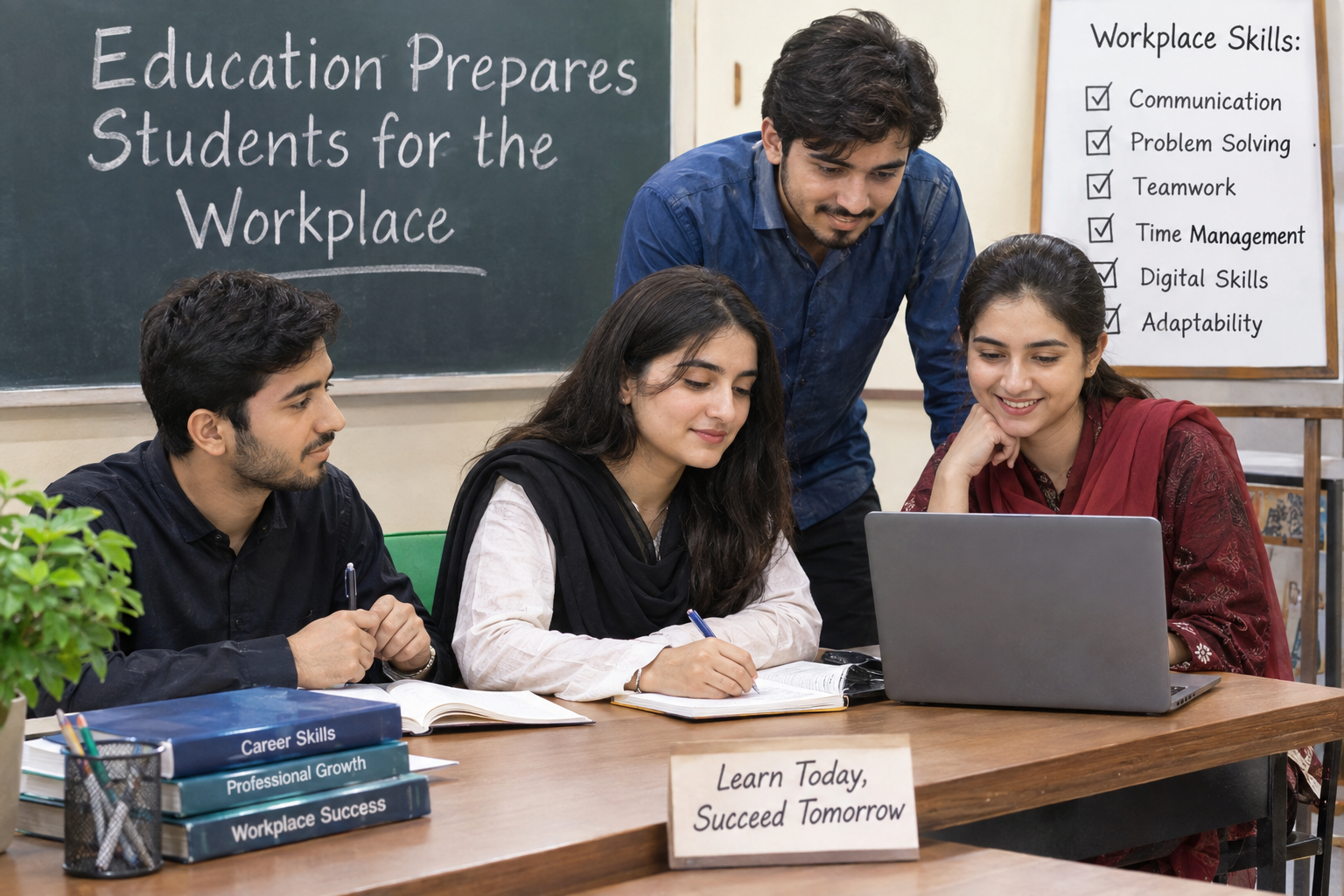
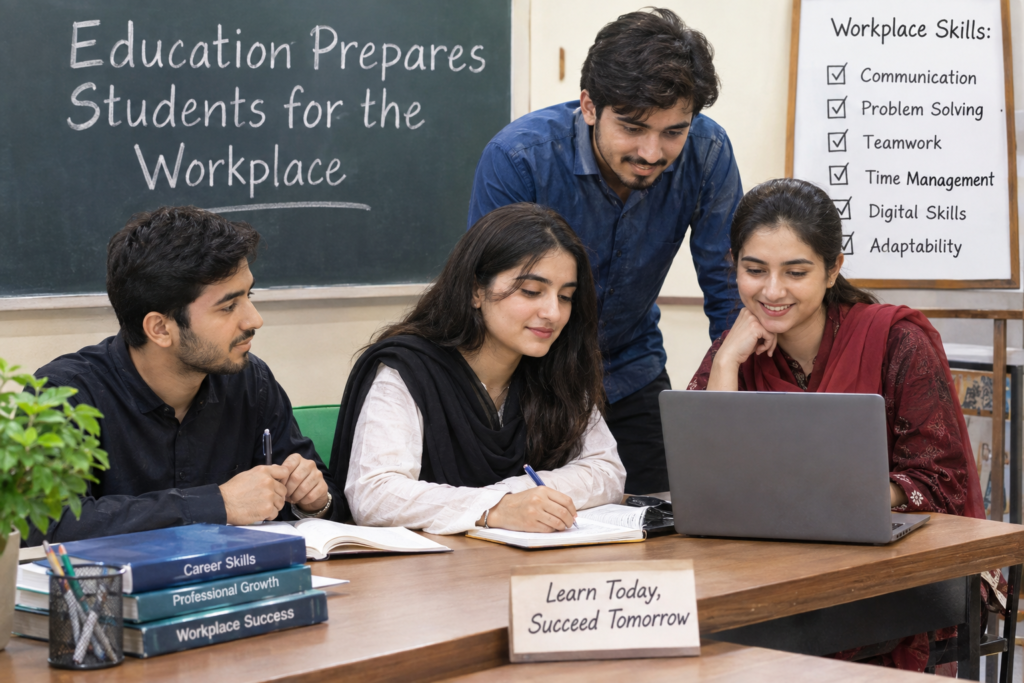
Education plays an important role in preparing students for their future careers. School and college are not only places where students learn subjects and complete assignments. They are also environments where young people develop knowledge, skills, confidence, discipline, and attitudes that can help them succeed in the workplace. In today’s competitive job market, employers look for people who can communicate well, solve problems, work with others, manage their time, and adapt to change. A good education helps students build these qualities before they enter professional life.
Building Knowledge for a Successful Career
One of the main ways education prepares students for the workplace is by giving them useful knowledge. Every career requires a certain level of understanding. A person working in business needs to understand finance, communication, and management. A teacher needs knowledge about education and learning. A computer professional needs technical knowledge and digital skills.
Education gives students a strong foundation that they can use in their professional careers. Students learn concepts, theories, facts, and practical information that can help them understand their chosen field. This academic knowledge gives them a better starting point when they begin looking for jobs.
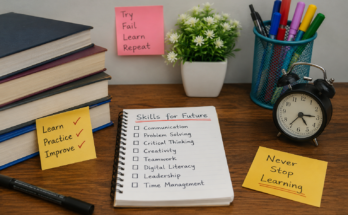
Education also teaches students how to learn. This is important because workplace requirements continue to change. A person who knows how to learn new information can continue improving throughout their career.
Developing Communication Skills
Communication is one of the most important workplace skills. Employees need to communicate with managers, coworkers, customers, and clients. They may need to write emails, prepare reports, give presentations, attend meetings, or explain ideas.
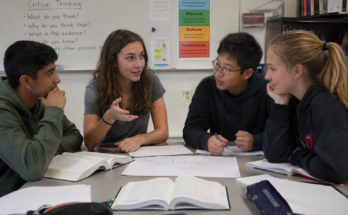
Education helps students develop communication skills through classroom discussions, presentations, group projects, writing assignments, and other activities. Students learn how to express their thoughts clearly and listen to different opinions.
Strong communication skills can make students more confident when they enter the workplace. They can explain their ideas more effectively and build better relationships with their colleagues.
Improving Problem Solving Skills
Employers value workers who can solve problems instead of waiting for someone else to provide every answer. Education helps students develop problem solving skills by giving them challenging tasks and questions.
Mathematics, science, business studies, computer science, and many other subjects require students to analyze information and find solutions. Even subjects that are not directly connected to a specific career can improve critical thinking.
When students learn how to identify a problem, understand its causes, consider different solutions, and choose the best option, they become better prepared for workplace challenges. These skills can be useful in almost every profession.
Teaching Time Management
Time management is another important skill for workplace success. Employees often have several responsibilities that must be completed within specific deadlines. Poor time management can lead to missed deadlines and lower quality work.
Students experience similar situations during their education. They have to attend classes, complete assignments, prepare for exams, participate in activities, and sometimes manage personal responsibilities at the same time.
By learning how to organize their schedules and prioritize important tasks, students develop habits that can help them in professional life. Education teaches them that completing work on time requires planning, responsibility, and consistency.
Encouraging Teamwork
Most modern workplaces depend on teamwork. Employees often work together on projects, solve problems as groups, and share responsibilities. For this reason, students need to understand how to work effectively with different people.
Educational activities such as group assignments, classroom projects, sports, and student organizations provide opportunities to practice teamwork. Students learn how to share ideas, listen to others, divide responsibilities, and work toward a common goal.
Teamwork also teaches students that people can have different opinions and working styles. Learning how to respect these differences is valuable in a professional environment.
Building Confidence and Responsibility
Education can help students become more confident and responsible. Completing assignments, speaking in front of classmates, participating in activities, and achieving academic goals can give students a sense of accomplishment.
Confidence is especially useful when students attend job interviews or start their first job. A confident person is more likely to communicate clearly, ask questions, and take responsibility for their work.
At the same time, education teaches students that success requires effort. Students learn that their choices have consequences and that they are responsible for completing their work. This sense of responsibility is essential in the workplace.
Developing Digital Skills
Technology has become an important part of almost every workplace. Employees may use computers, online communication platforms, digital documents, databases, project management systems, and other technologies.
Education helps students develop digital skills that can make the transition into professional life easier. Students may learn how to research information online, create presentations, use productivity software, communicate digitally, and work with different types of technology.
Digital skills are especially important because technology continues to develop. Students who become comfortable with technology are often better prepared to learn new tools in the future.
Preparing Students for Workplace Challenges
The workplace can be very different from the classroom. Employees may face deadlines, difficult customers, changing responsibilities, workplace conflicts, and unexpected problems. Education cannot predict every challenge, but it can teach students how to respond to difficult situations.
Academic life often requires students to deal with pressure and setbacks. A student may receive a low grade, struggle with a difficult subject, or fail an important test. These experiences can teach resilience and encourage students to learn from their mistakes.
When students understand that failure can be part of learning, they may become more comfortable with challenges in their professional careers.
Teaching Professional Discipline
Workplace success requires discipline. Employees need to arrive on time, follow instructions, complete responsibilities, respect others, and maintain professional behavior.
Education helps students develop these habits from an early stage. Attending classes regularly, submitting assignments before deadlines, following school rules, and participating responsibly in academic activities can build discipline.
These habits may seem simple, but they can have a major effect on future professional performance. Employers appreciate workers who can be trusted to complete their responsibilities without constant supervision.
Connecting Education With Career Goals
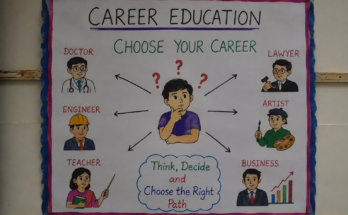
Education also gives students an opportunity to explore different career options. Students can discover their interests by studying different subjects and participating in activities.
Career related courses, internships, workshops, training programs, and practical projects can help students understand what professional life may look like. These experiences can help students make better decisions about their future careers.
When students understand their strengths and interests, they can choose education and training that supports their career goals.
Developing Critical Thinking
Critical thinking is highly valuable in the modern workplace. Employees are often expected to evaluate information, identify reliable sources, compare different ideas, and make reasonable decisions.
Education encourages students to ask questions rather than simply accept information. Research assignments and classroom discussions can help them understand how to examine evidence and form their own conclusions.
Critical thinking can help employees make better decisions and avoid mistakes. It can also help them understand complex workplace situations.
Learning Adaptability
The workplace is constantly changing. New technologies, business practices, customer expectations, and job responsibilities can appear over time. Students therefore need to be prepared to adapt.
Education teaches adaptability by exposing students to different subjects, ideas, technologies, and learning methods. Students often need to adjust when teachers introduce new assignments or when they face unfamiliar topics.
This ability to adjust can become a major advantage in professional life. Employees who are willing to learn and adapt can often handle workplace changes more effectively.
Building Professional Relationships
Education gives students opportunities to interact with teachers, classmates, mentors, and other people. These relationships can help students understand the importance of respect, cooperation, and professional behavior.
Students can learn how to communicate with people who have different personalities and opinions. These social skills are useful when building professional relationships with coworkers, managers, customers, and business partners.
Networking opportunities through educational institutions can also introduce students to professionals and career opportunities.
Conclusion
Education helps students prepare for the workplace in many different ways. It provides academic knowledge while also developing communication skills, problem solving abilities, teamwork, time management, digital skills, confidence, discipline, and adaptability. These qualities can help students move from education into professional life with greater confidence.
A successful career requires more than a degree or certificate. Employers need people who can think clearly, communicate effectively, work with others, solve problems, and continue learning. Education provides students with opportunities to develop these abilities before they enter the workforce.
For students, the real value of education is not only what they learn from textbooks. It is also the habits, skills, experiences, and confidence they gain along the way. By taking their education seriously and actively developing workplace skills, students can build a strong foundation for career success and become better prepared for the changing demands of the modern workplace.